
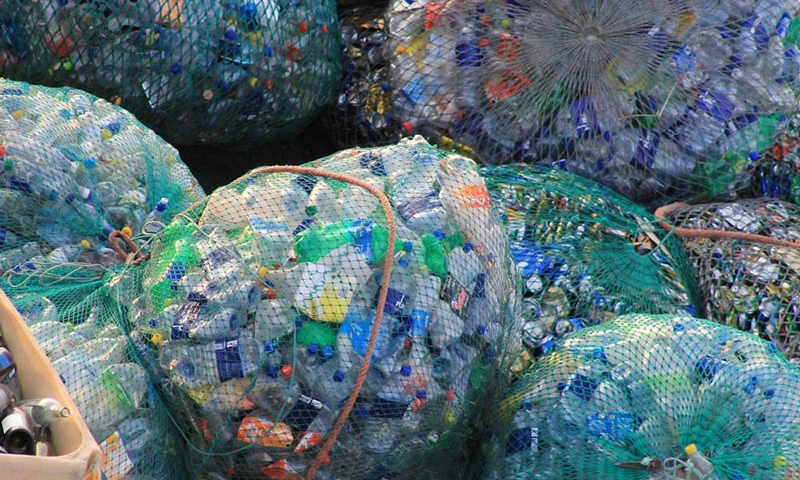
Plastic waste has become one of Africa's most visible environmental challenges. From crowded urban centres to rural communities, discarded bottles, bags, packaging and other plastic materials are increasingly finding their way into streets, drainage systems, rivers, wetlands and lakes.
But plastic waste is not only a pollution problem.
It can also be a resource.
With the right systems, investment and innovation, plastic waste can be collected, processed and transformed into valuable materials and products. Moving from plastic waste pollution to value addition could help African countries address environmental challenges while creating jobs, supporting businesses and strengthening local economies.
Turning a Waste Problem into an Opportunity
For years, plastic has largely been viewed as something to throw away after use. Once discarded, it becomes someone else's problem.
A circular economy offers a different approach.
Instead of allowing plastic to become waste, materials can be collected and returned to productive use. Used plastic bottles, containers and packaging can be sorted, cleaned and processed into raw materials for manufacturing.
This creates value at several stages of the process—from collection and sorting to processing, manufacturing and distribution.
The People Behind Plastic Recovery
Across Africa, thousands of people already earn a living collecting and sorting recyclable materials.
Waste pickers and informal waste collectors are often among the first to recover valuable plastics before they reach landfills, waterways or the wider environment.
Their contribution is significant, yet many operate without adequate equipment, stable incomes or formal recognition.
Creating stronger recycling systems can provide these workers with safer working conditions and better economic opportunities. Cooperatives and organised collection networks can also help small-scale collectors access markets and negotiate better prices for recovered materials.
From Bottles to New Products
Value addition begins when collected plastic is processed into something that can be used again.
Depending on the type of plastic, recovered material can be processed into recycled pellets or flakes that become inputs for manufacturing. Other forms of plastic waste can be used to produce items such as furniture, construction materials, household products and other durable goods.
The possibilities vary depending on available technology, markets and the quality of recovered material.
The key principle remains the same: a material that was once considered waste can become an input for another production process.
Creating Jobs for Africa's Growing Population
Africa has a large and growing young population, making job creation an important economic priority.
The recycling and broader circular economy sector can contribute to employment at multiple levels.
Jobs can be created in collection, transportation, sorting, processing, manufacturing, equipment maintenance, product design and waste-management services.
Entrepreneurs can also build businesses around innovative uses for recovered plastics.
This means tackling plastic pollution does not necessarily have to be viewed as a cost. With appropriate investment, it can become part of a wider economic opportunity.
Women and Young People at the Centre
Women and young people can play an especially important role in building Africa's circular economy.
Women-led community groups are already involved in waste collection, recycling and environmental initiatives in many communities. Supporting these groups with training, equipment, finance and market access can enable them to develop larger and more sustainable enterprises.
Young entrepreneurs can similarly introduce new technologies and business models for collecting, processing and reusing plastic waste.
The transition from waste management to value addition therefore has the potential to combine environmental protection with economic empowerment.
Investment Is the Missing Link
Collecting plastic is only the first step.
For value addition to work at scale, Africa needs investment in sorting facilities, recycling equipment, transportation, storage, processing plants and markets for recycled products.
Small businesses often face challenges accessing the capital required to purchase equipment and expand their operations.
Financial institutions, governments, development organisations and private investors can help bridge this gap by supporting businesses that demonstrate viable circular-economy models.
At the same time, policies that encourage the use of recycled materials can help create reliable markets for the products being produced.
Businesses Must Be Part of the Solution
Manufacturers and consumer brands also have an important role.
Companies that place plastic packaging on the market can contribute to systems that collect and recover that packaging after use. They can also redesign products and packaging to make them easier to reuse or recycle.
This shifts the conversation from simply asking consumers to "dispose responsibly" towards creating shared responsibility throughout the product life cycle.
Building a Circular Africa
Africa does not need to copy waste-management systems from other parts of the world. There is an opportunity to develop solutions suited to its own communities, markets and economic realities.
Local recycling enterprises, community collection systems, innovative entrepreneurs and responsible businesses can form the foundation of a circular economy that keeps materials circulating within local economies.
Instead of exporting waste or allowing valuable materials to disappear into dumpsites and waterways, countries can develop industries around recovering and processing those materials.
From Pollution to Possibility
Plastic pollution remains a serious environmental challenge. Recycling and value addition will not eliminate the problem on their own, and reducing unnecessary plastic use remains important.
But the material already in circulation represents an opportunity.
The question is whether Africa can build the systems needed to capture that value.
With stronger collection networks, investment in recycling infrastructure, support for waste workers, innovative businesses and responsible production, plastic waste can move from being an environmental burden to becoming an economic resource.
The future of plastic in Africa does not have to end with disposal. With the right approach, what is discarded today can become the raw material, business opportunity and source of employment of tomorrow.