
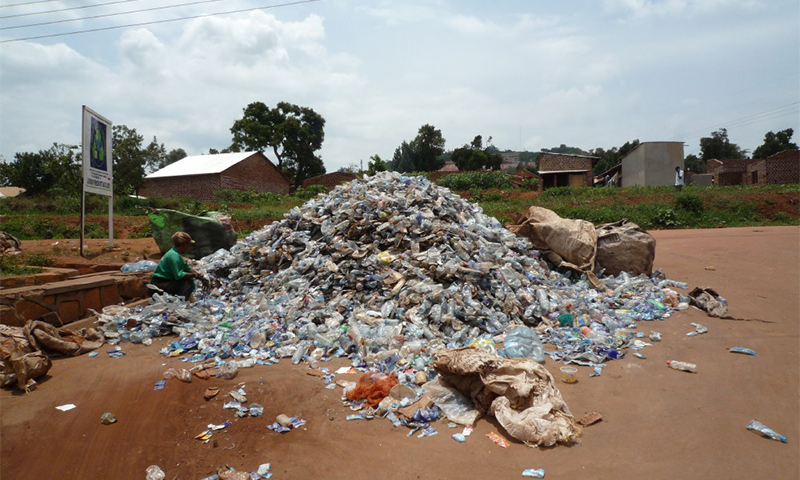
Kampala, Uganda’s bustling capital, faces a growing challenge: plastic waste. From discarded bottles and packaging to plastic bags clogging drainage channels, plastic waste has become a familiar sight across parts of the city. But amid the environmental challenge, an unexpected solution is emerging. Unemployed Ugandans are turning plastic collection into an opportunity to earn an income while helping clean up Kampala. For many young people struggling to find formal employment, collecting and sorting plastic waste offers a practical way to make a living. What might otherwise be considered rubbish has become a valuable resource that can be collected, sorted and sold to recycling companies.
From Waste to Income
Plastic waste collectors move through neighbourhoods, markets and streets looking for recyclable materials. They collect discarded bottles and other plastics before sorting them and selling them to recycling businesses. The work is often physically demanding and provides relatively modest earnings, but for people without stable employment, it can provide an important source of income. More importantly, the collectors are contributing to a circular economy. Instead of plastic ending up in landfills, drainage systems or waterways, recyclable materials are recovered and given a second life.
Cleaning Kampala One Plastic Bottle at a Time
The environmental benefits are significant. Plastic can remain in the environment for decades, creating problems for drainage systems, soil and water bodies. In a city like Kampala, where heavy rainfall can quickly overwhelm blocked drainage channels, removing plastic waste from streets can also help reduce flooding risks. Waste collectors therefore play a role that extends beyond earning a living. Their daily activities help keep public spaces cleaner and reduce the amount of plastic entering Kampala's waste streams. Yet their contribution is often overlooked. Many collectors work informally, without protective equipment, stable working conditions or access to social protections. They are part of the city's waste-management system, even though they may not always be recognised as such.
An Opportunity for Employment
Uganda's employment challenge makes initiatives like plastic collection particularly important. For someone unable to find a formal job, waste recovery can provide an entry point into the wider recycling industry. With better organisation, training and investment, informal collectors could potentially move into more stable roles in sorting, processing, logistics and recycling. Businesses and local authorities can also benefit by working more closely with waste collectors. Supporting collection networks could increase the amount of recyclable plastic recovered while creating additional employment opportunities.
Turning a Challenge into a Solution
Kampala's plastic waste problem will not disappear through collection alone. Reducing unnecessary plastic use, improving waste disposal, expanding recycling infrastructure and educating communities about proper waste management are all necessary. But the people collecting plastic today are already making a difference. Their work demonstrates how an environmental problem can also become an economic opportunity. What begins as a discarded plastic bottle on a Kampala street can become income for a jobless worker, raw material for a recycling company and another step toward a cleaner city. Kampala still has a long way to go in tackling plastic pollution. But every bottle recovered, every drainage channel cleared and every worker earning a livelihood from recycling represents progress.
For these Ugandans, waste is not simply rubbish. It is an opportunity—and their work is helping Kampala turn its plastic problem into part of the solution.