
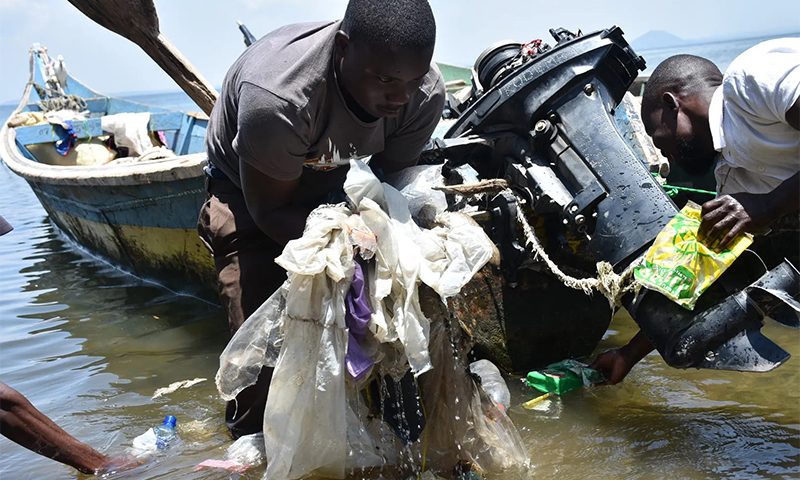
Lake Victoria is more than Africa's largest lake. It is a source of food, water, transport, employment and income for millions of people across Kenya, Uganda and Tanzania.
But beneath the surface of this vital ecosystem lies a growing threat: plastic waste.
Plastic bottles, bags, food packaging, fishing-related waste and other discarded materials are finding their way into the lake. What begins as litter on streets and shorelines can eventually become pollution in the water, threatening aquatic life and the communities that depend on the lake.
A Lake Under Pressure
Lake Victoria already faces numerous environmental pressures, including pollution, overfishing, invasive species, habitat degradation and the effects of climate change.
Plastic waste adds another layer to these challenges.
Unlike organic waste, plastic does not simply disappear. Larger pieces can persist in the environment for years and gradually break down into smaller fragments.
Rainwater can carry plastic waste from urban areas into drainage systems, rivers and eventually the lake. Poorly managed waste around markets, beaches and settlements can also find its way directly into the water.
The result is an increasing amount of plastic entering an ecosystem that supports an extraordinary range of life.
A Threat to Aquatic Life
Plastic pollution can harm fish, birds and other aquatic organisms in several ways.
Animals may mistake plastic fragments for food. Larger pieces can also entangle wildlife, restricting movement or causing injury.
As plastic breaks down into smaller particles, microplastics can spread through the aquatic environment. These particles can be ingested by organisms and move through food webs.
The full long-term consequences of microplastic pollution in Lake Victoria continue to be studied, but its presence adds another reason to reduce the amount of plastic entering the lake.
Protecting aquatic life means preventing pollution before it reaches the water.
Fishermen Feel the Impact
The consequences of lake pollution are not limited to wildlife.
Fishing communities depend on Lake Victoria for their livelihoods. Anything that threatens the health of the lake can ultimately affect the people whose incomes depend on it.
Plastic waste can interfere with fishing activities, damage or obstruct equipment and contribute to the degradation of important habitats.
For communities living along the lake, protecting the water is therefore also about protecting livelihoods.
A polluted lake is an environmental problem, but it can quickly become an economic problem as well.
From Streets to the Lake
One of the most important lessons from Lake Victoria's plastic pollution is that the problem does not necessarily begin at the shoreline.
Plastic discarded several kilometres away can travel through drainage channels and rivers before eventually reaching the lake.
This means efforts to protect Lake Victoria cannot focus only on beaches and fishing areas.
Cities, towns and communities within the lake's catchment must also improve how they manage waste.
Better waste collection, responsible disposal, recycling and reduced use of unnecessary single-use plastics can prevent waste from reaching waterways in the first place.
Communities Can Be Part of the Solution
Communities around Lake Victoria are already taking action through shoreline clean-ups, waste collection and environmental awareness initiatives.
These efforts are important, but they need support.
Local organisations, businesses, governments and residents can work together to establish reliable waste collection systems and strengthen recycling initiatives.
Women and young people can also play an important role in waste recovery and recycling enterprises, turning discarded materials into economic opportunities while helping protect the environment.
Businesses Have a Responsibility
The responsibility for plastic pollution should not rest entirely on consumers.
Businesses that manufacture, distribute and sell products packaged in plastic have an important role to play in reducing the amount of waste entering the environment.
This can include reducing unnecessary packaging, introducing reusable or recyclable alternatives and supporting systems that collect packaging after use.
A shift towards a circular economy can help keep materials in productive use instead of allowing them to become pollution.
Protecting Lake Victoria Starts on Land
Cleaning plastic from the lake is important, but prevention is even more effective.
Once plastic enters the water, collecting it becomes considerably more difficult. It can disperse across large areas, sink, fragment or become mixed with other debris.
Preventing plastic from reaching rivers, drainage channels and shorelines is therefore one of the most important steps in protecting the lake.
This requires better urban waste management, stronger environmental enforcement, public awareness and investment in recycling and recovery systems.
A Shared Responsibility
Lake Victoria belongs to no single community or sector. Its waters connect Kenya, Uganda and Tanzania, making cooperation essential.
Governments, businesses, environmental organisations, fishing communities and ordinary citizens all have a role to play.
Every piece of plastic prevented from entering the lake is one less potential threat to its ecosystem.
Lake Victoria has sustained communities for generations. Protecting it from plastic pollution is about ensuring that it can continue to do so for generations to come.
The lake cannot speak for itself. Its future depends on the choices made on the land surrounding it. Reducing plastic waste today is an investment in the life, livelihoods and communities that depend on Lake Victoria tomorrow.