
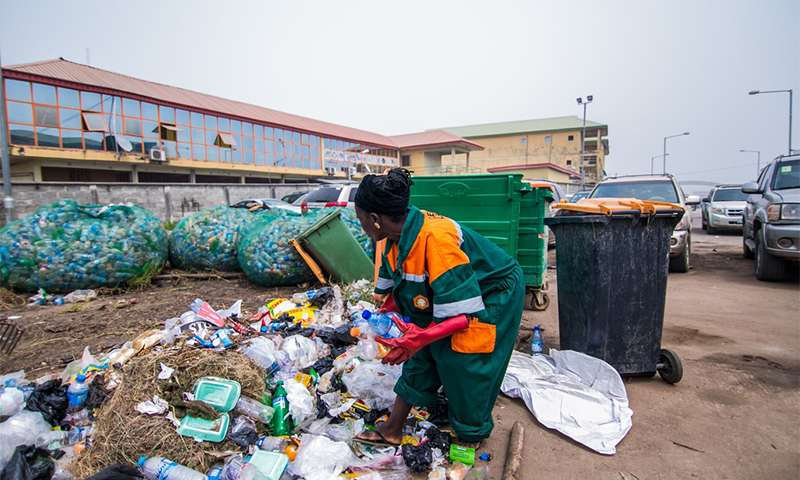
Plastic waste has become one of the most visible environmental challenges facing cities and communities across Africa. From clogged drainage channels and polluted waterways to littered streets and overflowing waste collection points, the consequences of poor plastic waste management affect both the environment and people's livelihoods.
Yet, behind the effort to keep communities cleaner is a group whose contribution often receives too little attention: women.
Across many communities, women are playing a central role in collecting, sorting, recycling and repurposing plastic waste. Their work is helping reduce pollution while creating income opportunities for households and contributing to more sustainable communities.
Women Turning Waste into Opportunity
For many women, plastic waste management is more than an environmental activity. It is a source of livelihood.
Women involved in waste collection and recycling can earn income by gathering recyclable plastics and selling them to recycling companies or collection centres. Others have developed small businesses that transform discarded plastics into useful products.
What might otherwise end up on a roadside or in a drainage channel can become a source of income.
These activities demonstrate an important connection between environmental protection and economic empowerment. When women have opportunities to participate in the circular economy, waste becomes not simply a problem to be removed, but a resource that can create value.
The Invisible Work Behind Cleaner Communities
Women are also often at the centre of household waste management. They make decisions about how household waste is stored, separated and disposed of, and they frequently influence environmental practices within families.
This places women in a unique position to promote better waste management practices.
Through community groups, schools, neighbourhood initiatives and informal networks, women can educate households about separating recyclable materials, reducing single-use plastics and disposing of waste responsibly.
Their influence extends beyond individual households. Women-led initiatives can mobilise entire communities around environmental action.
Creating Safer and Cleaner Cities
Plastic waste does not only affect how a city looks. When improperly disposed of, plastic can block drainage systems, contribute to flooding and eventually make its way into rivers, wetlands and other ecosystems.
Women working in waste collection and recycling therefore contribute directly to healthier and cleaner communities.
By removing plastic before it reaches waterways and other sensitive environments, waste workers help reduce the environmental burden created by plastic pollution.
However, the work itself can be challenging. Informal waste workers may operate without adequate protective equipment, stable incomes, access to financing or formal recognition. Women can face additional barriers, including limited access to business opportunities and decision-making spaces.
Recognising their contribution must therefore go beyond appreciation. It should include practical support that makes their work safer, more sustainable and more profitable.
Supporting Women in the Circular Economy
There is significant potential to strengthen the role of women in plastic waste management.
Access to training can help women develop skills in waste sorting, recycling, business management and product development. Access to affordable finance can enable women-led enterprises to purchase equipment, expand collection networks and create additional employment.
Partnerships between communities, local authorities, recycling companies and development organisations can also create stronger waste-management systems in which women are formally included.
Most importantly, women should have a voice in the decisions that shape waste-management policies and programmes.
Their experience on the ground provides valuable insight into what works, where systems fail and what communities need.
From Waste Collectors to Environmental Leaders
Women involved in plastic waste management should not be viewed only as waste collectors. They are entrepreneurs, environmental stewards, community organisers and potential leaders in the transition towards a circular economy.
Their work shows what is possible when environmental challenges are connected with economic opportunity.
Supporting these women can create benefits that extend well beyond waste reduction. It can strengthen household incomes, create jobs, improve public spaces and encourage communities to adopt more sustainable practices.
A Cleaner Future Starts with Inclusion
Tackling plastic pollution requires more than collection bins and recycling facilities. It requires people, communities and systems working together.
Women are already doing much of this work.
The challenge now is to ensure that their contribution is recognised, supported and included in the development of sustainable waste-management solutions.
When women have the resources, opportunities and platforms to lead, plastic waste management can become more than a response to pollution. It can become a pathway to economic empowerment, community resilience and a cleaner future.